When the government announced plans to exempt certain pensioners from income tax starting in 2027, many expected a broad relief measure. The reality, according to new analysis, is starkly different. Research by LCP, a leading pensions consultancy, reveals that the "vast majority" of Britain’s retirees will not qualify for the concession. Only about 5% of all state pension recipients are set to benefit.
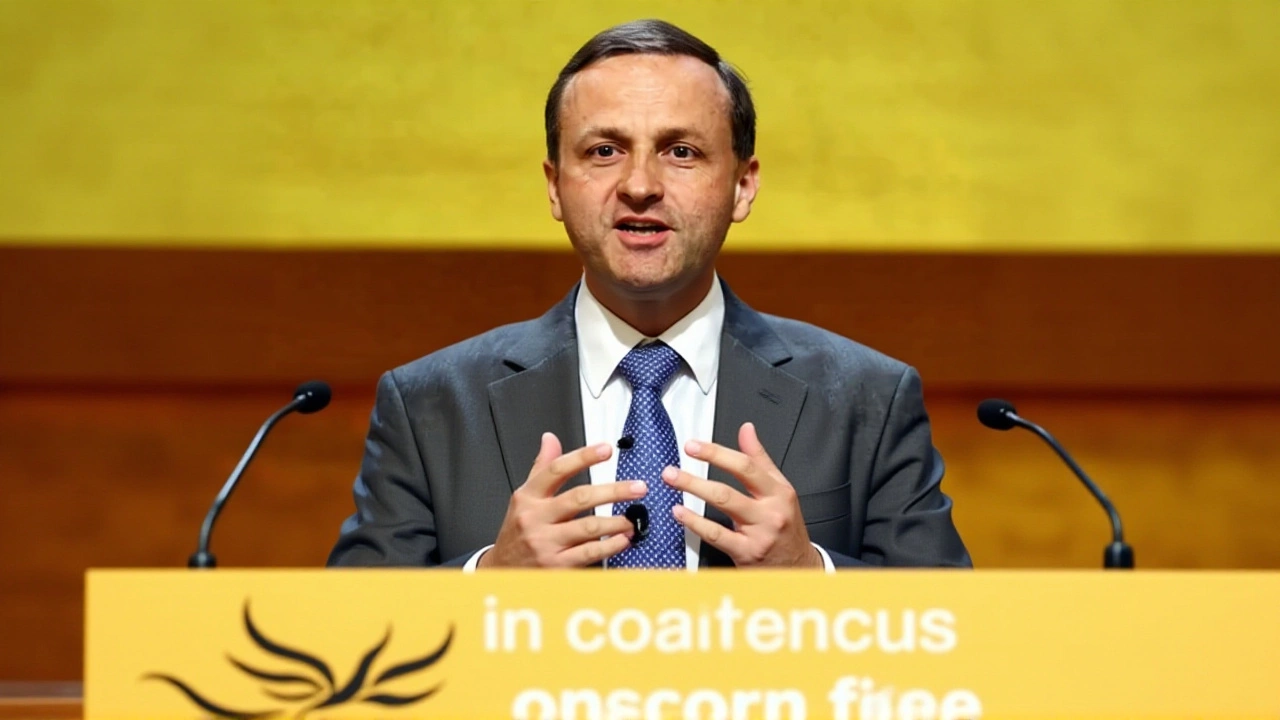
The findings were highlighted by Steve Webb, former Minister of State for Pensions and current pensions expert at LCP. His warning cuts through the political rhetoric: while the policy sounds generous, the eligibility criteria are so narrow that over 12 million pensioners will see no change to their tax bills.
The Narrow Scope of the Concession
Here’s the thing: the government clarified that this isn’t just an administrative simplification. For those who do qualify, it means they won’t be charged income tax at all on their pension income. But the catch lies in who counts as "qualifying."
LCP’s analysis breaks down the 13.2 million people currently receiving a state pension in the UK. Of these, fewer than 1 million will meet the strict conditions. This leaves approximately 12.2 million pensioners—roughly 95% of the total population—excluded from the break. The gap between the headline promise and the actual impact is significant, raising questions about the policy’s effectiveness.
The confusion stems from how the concession interacts with existing tax thresholds. The government’s plan targets pensioners whose income consists primarily of the state pension, but only if that income pushes them into a taxable bracket under specific rules. If your pension is already below the personal allowance, you don’t pay tax anyway—so you don’t need a special exemption.
Old vs. New State Pension Systems
The divide between the old and new state pension systems creates two distinct groups, both largely missing out.
First, consider the 7.7 million pensioners on the old state pension system. According to LCP, none of them will qualify. Why? Because the concession applies only if their sole income is the basic state pension "with no increments." The current rate of the basic state pension is £9,614 per year. Even with annual increases, this figure will remain well below the income tax personal allowance of £12,570 by the end of the current Parliament.
Since these pensioners aren’t paying income tax on their state pension in the first place, the exemption is redundant for them. It’s like offering a discount on a product you weren’t going to buy anyway.
Then there’s the second group: around 5.0 million people on the new state pension. Here, the exclusion is even more pronounced. More than four in five of these individuals won’t qualify. One major reason is residency: approximately 290,000 new state pension recipients live outside the UK and are automatically excluded. After accounting for non-UK residents and others whose additional private pension savings push them above the relevant thresholds, only about 700,000 people remain eligible.
Why Does This Matter?
Turns out, the issue isn’t just about money—it’s about perception versus reality. The government presented the measure as a significant concession to help retirees. But for the average pensioner, life goes on unchanged.
"This highlights a significant gap between the apparent breadth of the Government’s concessionary policy statement and the relatively small proportion of pensioners who will actually benefit," noted the LCP report. The policy effectively protects a tiny minority—those with just enough state pension income to trigger a small tax liability, but not enough other income to make them high earners.
For context, compare this to previous tax reforms. In 2011, the introduction of the flat-rate new state pension was designed to simplify the system and increase benefits for many. This latest move, however, adds complexity without delivering widespread relief. Experts argue that if the goal was to reduce tax burdens for retirees, a broader adjustment to the personal allowance or state pension taxation rules would have been more effective.

What’s Next for Pension Policy?
As we look toward 2027, the question remains: will the government adjust the criteria? Or will this stand as a symbolic gesture rather than substantive reform?
Pension advocates are likely to call for a review. With inflation affecting living costs and healthcare expenses rising, the financial pressure on retirees is intensifying. A tax break that helps only 5% of the population may do little to ease the burden on the wider community.
Watch for reactions from opposition parties and consumer groups in the coming months. They will likely use LCP’s figures to challenge the government’s record on supporting older citizens. Meanwhile, individual pensioners should review their own tax positions to understand whether they fall into the narrow qualifying band—or simply continue as before.
Frequently Asked Questions
Who exactly qualifies for the 2027 tax exemption?
Only pensioners whose income consists mainly of the state pension and who have a small amount of additional income that pushes them just above the tax-free threshold. Specifically, around 700,000 people on the new state pension system are estimated to qualify. Those on the old system or living abroad do not qualify.
Why don't pensioners on the old state pension qualify?
The old basic state pension (£9,614/year) is significantly below the personal income tax allowance (£12,570). Since these pensioners already pay zero income tax on their state pension, the exemption offers no additional benefit. The rule requires the pensioner to be liable for tax before the exemption can apply.
How many pensioners are affected overall?
Out of 13.2 million state pension recipients in the UK, fewer than 1 million (approximately 5%) will benefit. The remaining 12.2 million, including all 7.7 million on the old system and most on the new system, will see no change to their tax situation due to this specific concession.
When does this policy take effect?
The tax exemption is scheduled to begin in the tax year starting in 2027. Until then, current tax rules regarding state pensions and personal allowances will remain in place. The government has not specified an exact month or day within the 2027 tax year.
Is Steve Webb still involved in politics?
No, Sir Steven John Webb left elected office in 2015 after serving as MP for Thornbury and Yate and previously as Minister of State for Pensions. He now works as a pensions commentator and expert at LCP, providing independent analysis on retirement policy.